
Federation calls for ‘driverless’ cars to be able to work alongside ALL classics
Published: 03/09/2025
The Federation of British Historic Vehicle Clubs (FBHVC) is calling on the government to ensure that automated ‘driverless’ vehicles are able to safely interact with historic vehicles (HVs) - of all shapes, sizes and types.
It is also calling for the conditions for the safe introduction of automated vehicles to be without restrictions on the continued freedom of HVs to operate.
“Implementation of automated systems must not result in any restrictions on, or segregation of other road users” says the FBHVC.
The Federation also asks for HVs to be included as a “specific category of legacy road users”.
It comes as the FBHVC – which represents more than 500 clubs and 250,000 enthusiasts –submits its response to a Government call for evidence on the next steps to allow fully-automated vehicles on the road.
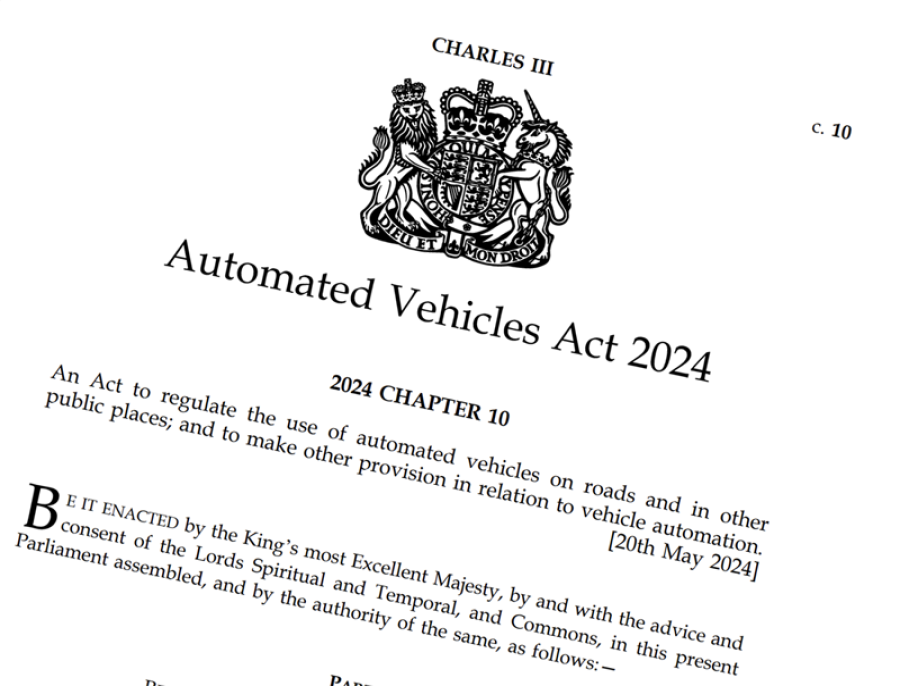
To implement the Automated Vehicles Act 2024, the government is seeking input on a ‘Statement of Safety Principles’ for entirely ‘driverless’ automated vehicles, initially taxis. Once written, this document must then be approved by the Secretary of State for Transport.
The consultation’s starting point is that AVs must achieve a level of safety equivalent to, or higher than, that of “careful and competent” human drivers; and road safety will “be better as a result of the use of automated vehicles on roads than it would otherwise be.”
As part of its response to the 40-plus consultation questions, the Federation says AVs must be able to recognise the different characteristics of historic vehicles including their:
• Differing sizes (pre-war cars in particular are generally smaller than later ones)
• Different construction (many have bodies made of wood and fabric rather than metal or plastic)
• Different lighting including, for example, the use of trafficators/semaphores in place of flashing indicators on some vehicles and the use of hand signals in the absence of any electrical device
• Different speed as the HV community includes steam engines whose speeds are slow.
Explains FBHVC Legislation Director Lindsay Irvine: “A careful and competent human driver may immediately recognise an ‘old’ historic vehicle and make allowances for its performance accordingly. An AV will have to be programmed to recognise the different characteristics, or the system designed to learn the differences.”
He continues: “It not in our interest to resist the proposals and an AV will never tire, be distracted or intoxicated which are major causes of accidents. New technology often brings wider benefits and indeed many of our own HVs were once in the vanguard of technological advancements.
“However, our response seeks to ensure that AVs can safely interact with legacy vehicles such as ours, and that such safety should not be secured at the expense of our existing freedoms through restrictions or segregation.”
For more details, read the consultation and FBHVC response here: https://fbhvc.co.uk/consultations